

SLU-PP-332 Complete Research Guide: Dosage Protocol and Benefits


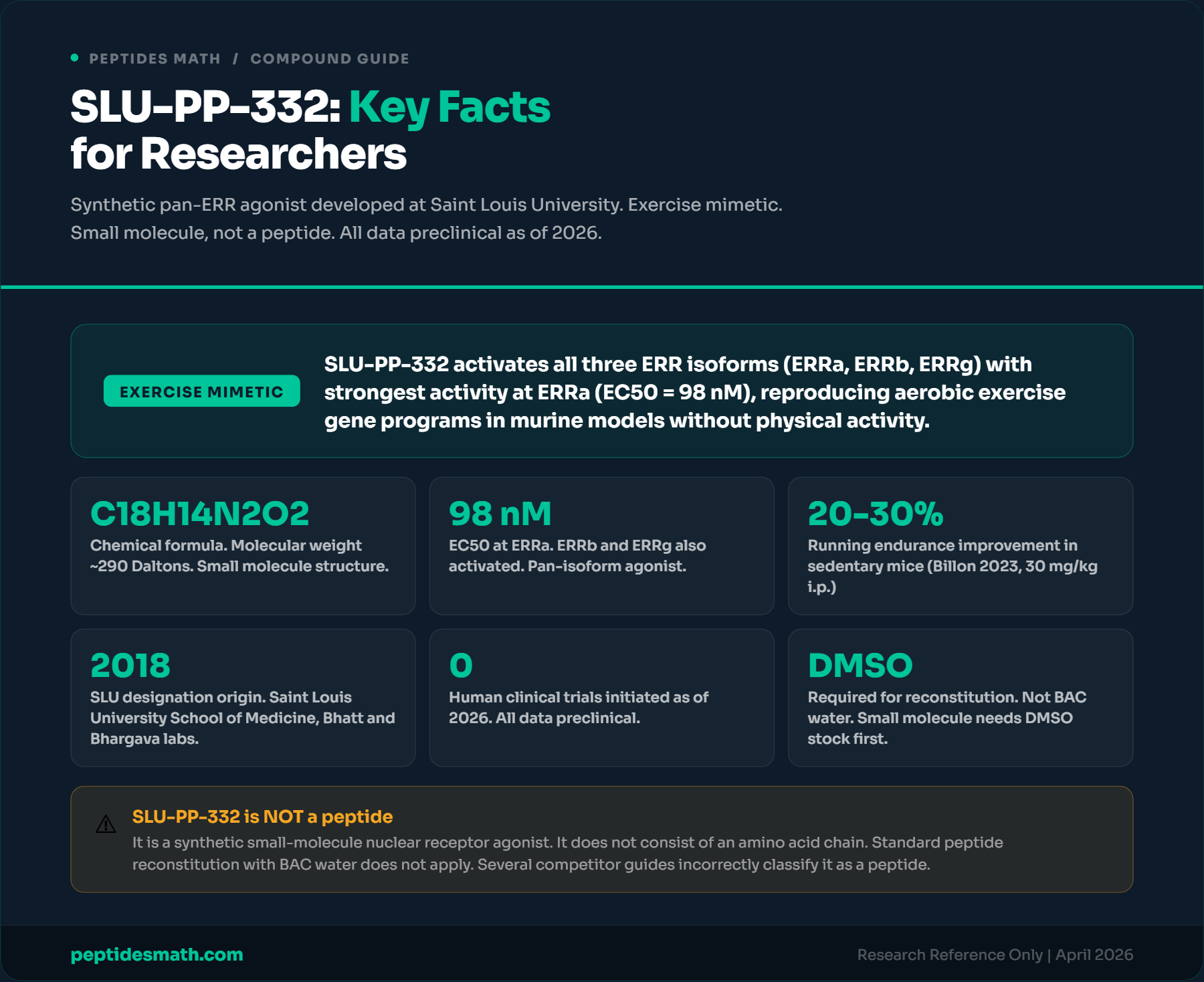
SLU-PP-332 is one of the most widely researched exercise-mimetic compounds to emerge from academic laboratories in recent years. Developed at Saint Louis University School of Medicine, this synthetic small-molecule pan-agonist of estrogen-related receptors has generated significant interest for its ability to activate aerobic exercise gene programs in preclinical models without requiring physical activity.
This SLU-PP-332 research guide covers the full picture: what the compound is, how it works at the receptor level, what the published studies show, the preclinical dosage protocols used in murine research, reconstitution guidance for research use, and what researchers need to know before working with this compound.
- SLU-PP-332 is a synthetic small-molecule pan-agonist of estrogen-related receptors (ERRa, ERRb, ERRg). It is NOT a peptide in the sense of the amino acid chain, despite being discussed in the research peptide community
- Developed at Saint Louis University School of Medicine by the Bhatt and Bhargava laboratories as part of a research initiative to develop novel ERR modulators
- Mechanism: activates all three ERR isoforms with preferential potency at ERRa (EC50 = 98 nM), promoting PGC-1a coactivator recruitment and upregulating genes governing mitochondrial biogenesis and fatty acid oxidation
- Billon et al. 2023 (ACS Chemical Biology) showed SLU-PP-332 induces an acute aerobic exercise gene program in sedentary mice and increases running endurance by 20 to 30% at 30 mg/kg intraperitoneal
- Wansapura et al. 2024 (JPET) showed that 50 mg/kg twice daily for 28 days increased resting energy expenditure, fatty acid oxidation, and decreased adiposity in obese mouse models
- No human clinical trials have been initiated as of 2026. All safety and efficacy data are preclinical
- Published murine studies used intraperitoneal injection. Subcutaneous administration is not validated for this compound
- Common research vial format: 5 mg. Reconstitution requires DMSO for the stock solution, then further aqueous dilution
- Half-life and human pharmacokinetics are not established in published literature
What is SLU-PP-332
SLU-PP-332 is a synthetic small-molecule compound classified as a pan-agonist of estrogen-related receptors (ERRs). The name reflects its institutional origin: SLU for Saint Louis University, PP for pharmacological probe. It carries the CAS number 303760-60-3 and the IUPAC name 4-hydroxy-N-[(Z)-naphthalen-2-ylmethylideneamino]benzamide, with the chemical formula C18H14N2O2 and a molecular weight of approximately 290 Daltons.
One of the most important things researchers should understand upfront: SLU-PP-332 is not a peptide in the classical sense. It does not consist of an amino acid chain. It is a synthetic small molecule that is being researched alongside metabolic peptides because it occupies a similar research space. Several competitor guides incorrectly classify it as a peptide. It is a small-molecule nuclear receptor agonist.
Origin and Development
SLU-PP-332 was developed at Saint Louis University School of Medicine by the Bhatt and Bhargava laboratories as part of a research initiative to create novel pharmacological tools for studying estrogen-related receptors. ERRs are orphan nuclear receptors, meaning no natural endogenous ligand has been identified for them. This made it challenging to develop selective research tools.
The compound emerged from a series of structure-activity relationship studies aimed at optimizing ERR agonist potency while maintaining activity across all three receptor isoforms. Research funding was provided by the National Institutes of Health, including the National Institute on Aging and the National Institute of Arthritis and Musculoskeletal and Skin Diseases.
What Makes SLU-PP-332 Distinct
Most exercise-related research compounds target a single pathway. SLU-PP-332 is a pan-ERR agonist, activating ERRa, ERRb, and ERRg simultaneously, with the highest potency at ERRa (EC50 = 98 nM). This broad receptor activation profile is what enables it to reproduce a wider range of aerobic exercise gene expression changes than single-pathway compounds.
Mechanism of Action: How SLU-PP-332 Works
Understanding the SLU-PP-332 mechanism is essential for correctly interpreting preclinical data. The compound works through nuclear receptor pharmacology rather than the receptor binding or hormonal signaling pathways typical of research peptides.
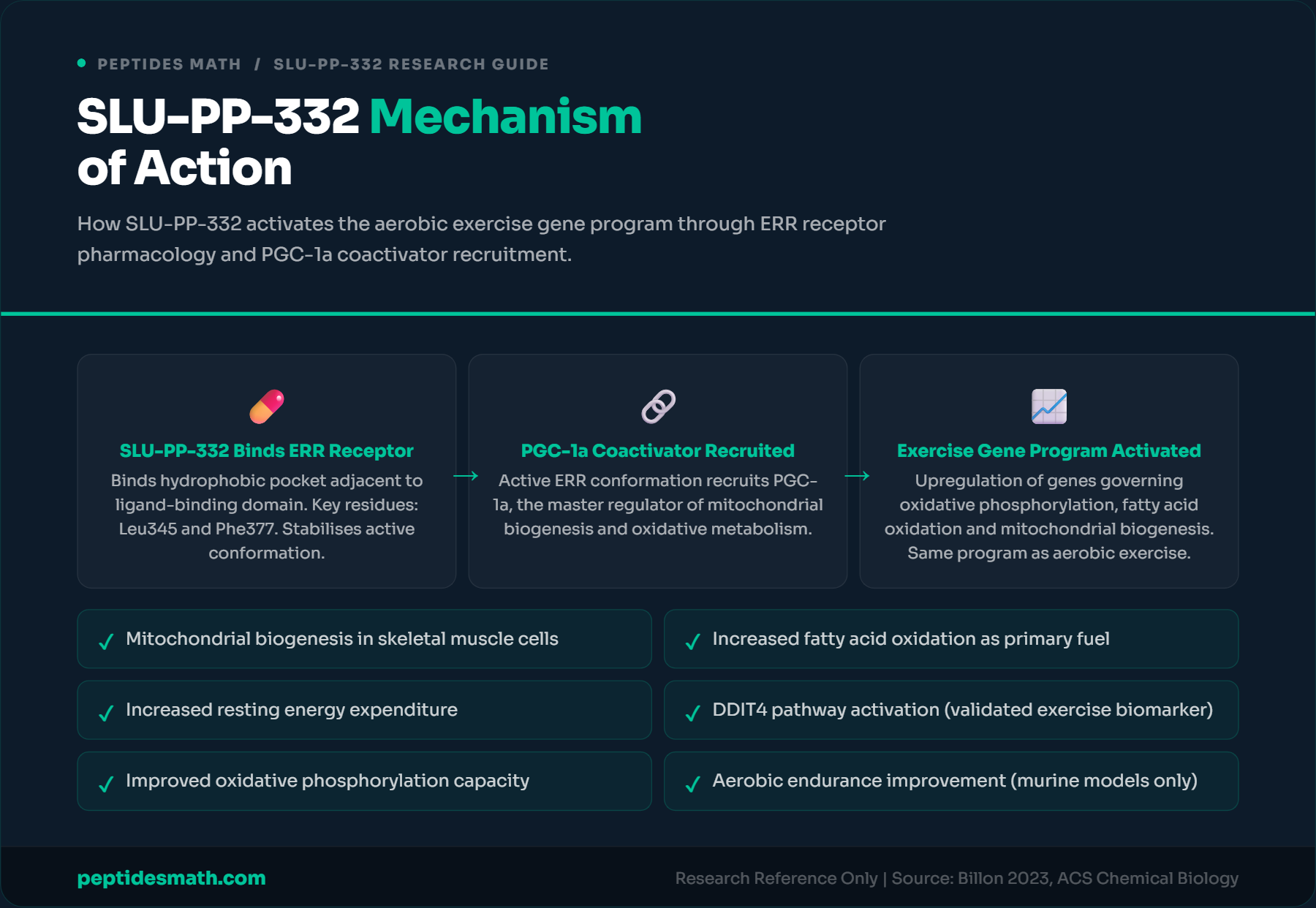
SLU-PP-332 binds to a hydrophobic pocket adjacent to the ligand-binding domain of estrogen-related receptors, with critical interactions involving residues Leu345 and Phe377. This binding stabilizes the receptor in its active conformation, promoting recruitment of the transcriptional coactivator PGC-1a (peroxisome proliferator-activated receptor gamma coactivator 1-alpha).
The PGC-1a Connection
PGC-1a is often referred to as the master regulator of mitochondrial biogenesis. When SLU-PP-332 activates ERRa and triggers PGC-1a recruitment, it upregulates an entire gene network governing oxidative phosphorylation, fatty acid oxidation, mitochondrial biogenesis, and cellular energy homeostasis.
This is the same transcriptional program activated by endurance exercise. The Billon et al. 2023 study in ACS Chemical Biology demonstrated that a single dose of SLU-PP-332 induced an acute aerobic exercise gene program in sedentary mice, with measurable plasma concentration of 0.2 micromolar and skeletal muscle concentration of 0.6 micromolar at 6 hours post-administration at 30 mg/kg intraperitoneal.
The DDIT4 Pathway
Research published in ACS Chemical Biology in 2022 demonstrated that SLU-PP-332 treatment induces DDIT4 (DNA damage-inducible transcript 4) expression specifically through ERRa activation. DDIT4 is a key genetic response to short bouts of aerobic exercise in human subjects, making it a validated biomarker of exercise-mimetic activity. The fact that SLU-PP-332 activates this specific pathway in the same way as physical exercise is a central piece of evidence for its classification as an exercise mimetic.
Why it is Not a Peptide
Peptides work by binding to cell surface receptors or intracellular receptors through ligand-receptor interactions involving amino acid sequences. SLU-PP-332 is a hydrazone compound that enters the cell and directly modulates nuclear receptor conformation in the ligand-binding domain. This is fundamentally different from peptide pharmacology. Researchers should not apply peptide reconstitution, storage, or dosage calculation frameworks to this compound.
Preclinical Research Data: What the Studies Show
All published efficacy and safety data for SLU-PP-332 come from murine (mouse) models. No human clinical trials have been initiated as of 2026. The preclinical data are well documented and peer reviewed, but cannot be directly extrapolated to human applications.
Billon et al. 2023 – Exercise Gene Program and Endurance
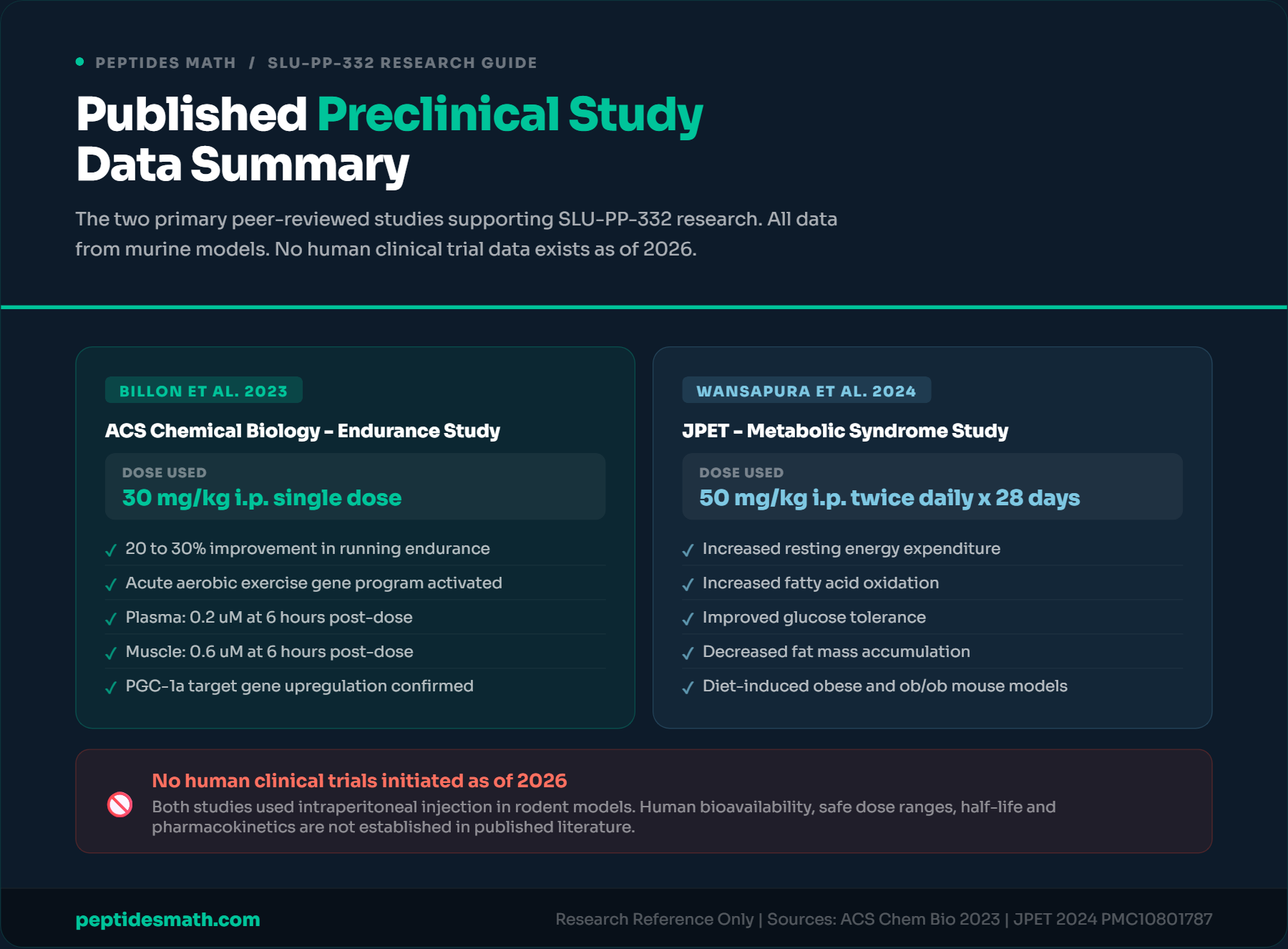
Published in ACS Chemical Biology, this study is the primary reference for SLU-PP-332 as an exercise mimetic. Key findings at 30 mg/kg intraperitoneal in sedentary C57BL/6J mice:
- Acute activation of aerobic exercise transcriptional gene program in skeletal muscle
- Increased running endurance by 20 to 30% compared to vehicle-treated controls
- Plasma concentration 0.2 micromolar and skeletal muscle concentration 0.6 micromolar at 6 hours post-dose
- Upregulation of PGC-1a target genes governing oxidative metabolism
- Increased mitochondrial respiration in skeletal muscle cells
Wansapura et al. 2024 – Metabolic Syndrome Model
Published in the Journal of Pharmacology and Experimental Therapeutics, this study extended findings to obesity and metabolic syndrome models. Protocol: 50 mg/kg intraperitoneal twice daily for 28 days (diet-induced obese mice) and 12 days (ob/ob mice). Key findings:
- Increased resting energy expenditure in obese mouse models
- Increased fatty acid oxidation as the primary fuel source
- Improved glucose tolerance
- Decreased fat mass accumulation
- No adverse effects reported in the published protocol at these doses
Important Limitations of the Preclinical Data
Researchers working with SLU-PP-332 should note several critical gaps in the published literature. Half-life and oral bioavailability data have not been published. All published studies used intraperitoneal administration in rodents. Pharmacokinetic parameters for subcutaneous or oral routes are not validated. No chronic toxicology studies in any species have been published. ERR receptors are expressed in the heart, brain, kidney, and liver, in addition to skeletal muscle, so systemic ERR agonism may produce off-target effects that have not yet been characterized.
SLU-PP-332 Dosage Protocol for Research
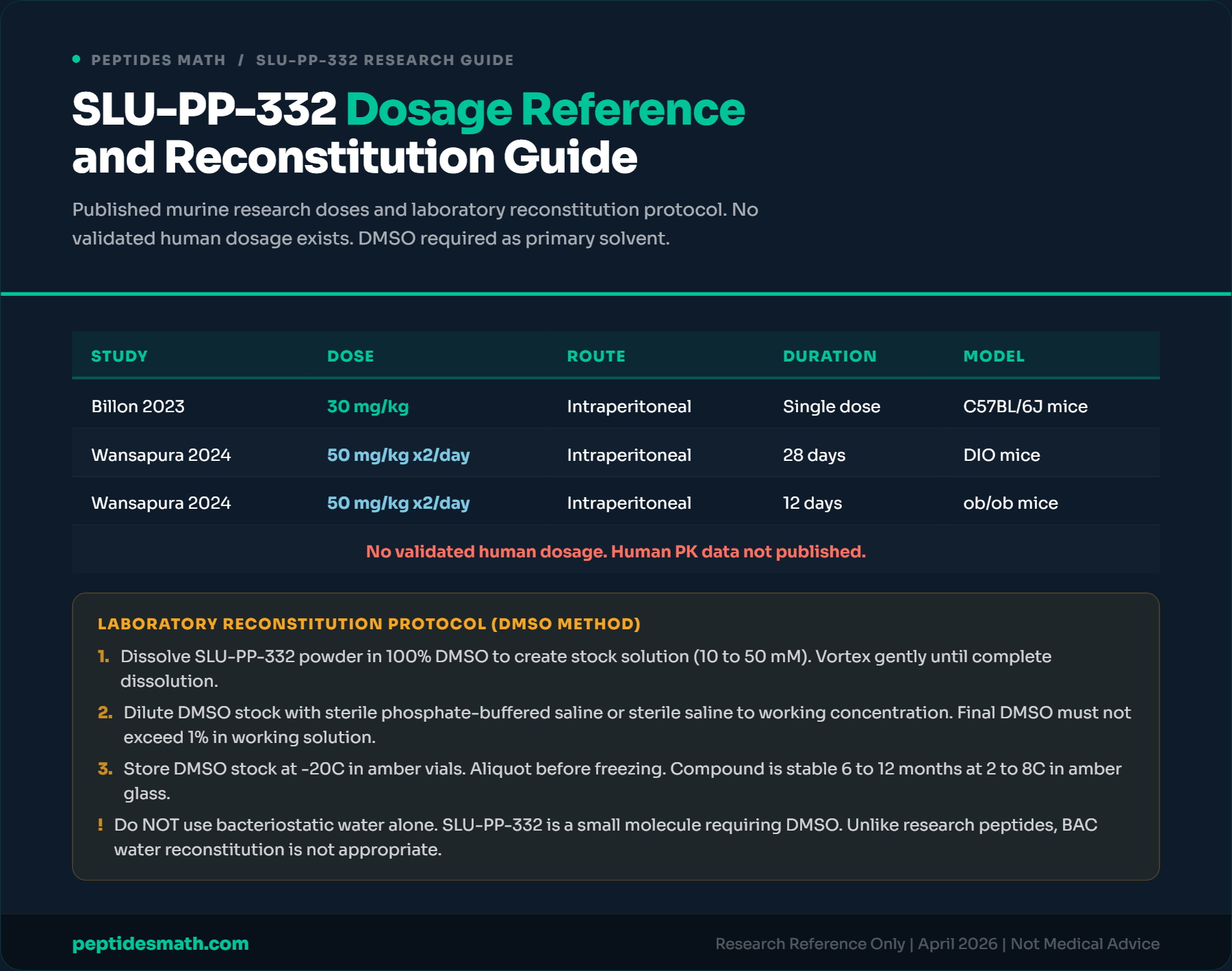
The SLU-PP-332 dosage protocols below are derived directly from published murine research. There is no validated human dosage for this compound. All dosing information is provided strictly for research reference. The SLU pp 332 dosage ranges used in published studies varied significantly between the endurance and metabolic syndrome studies.
Researchers should note that Jay Campbell’s 2026 article found that early community estimates were significantly lower than those reported in published murine research. The Wansapura 2024 protocol used 50 mg/kg twice daily, equating to 100 mg/kg per day in mouse models – far higher than the 500 mcg daily doses initially circulating in biohacking communities.
Published Murine Research Doses
Billon et al. 2023 (Endurance study): 30 mg/kg intraperitoneal, single acute dose
Wansapura et al. 2024 (Metabolic syndrome, 28 days): 50 mg/kg intraperitoneal, twice daily
Wansapura et al. 2024 (ob/ob mice, 12 days): 50 mg/kg intraperitoneal, twice daily
Research Cycle Guidance from Published Protocols
The Wansapura 2024 study used 28-day dosing cycles with metabolic assessment throughout. The 12-day ob/ob protocol produced similar metabolic effects in a shorter time frame. Based on the published literature and community research data, most protocols examining the effects of SLU-PP-332 have used 4- to 8-week treatment cycles.
Mypeptidematch.com notes that chronic administration studies extending beyond 12 weeks have observed diminishing returns in metabolic benefits in animal models, suggesting potential receptor desensitization. Protocols incorporating 2 to 4 week washout periods every 8 to 12 weeks are referenced in some research designs to maintain receptor sensitivity.
Administration Route Considerations
Published murine studies exclusively used intraperitoneal injection, which delivers the compound directly to the body cavity for rapid systemic absorption. This route is standard in rodent research but is not used in human applications.
Subcutaneous administration has been discussed in the research community, but it has not been validated for this compound in the published literature. Published studies report that the compound exhibits pH-dependent stability, with optimal absorption at pH 6-7.
SLU-PP-332 Reconstitution for Research Use
SLU-PP-332 reconstitution is different from standard peptide reconstitution. Because it is a small molecule rather than a peptide, it does not dissolve readily in bacteriostatic water alone. A DMSO (dimethyl sulfoxide) stock solution is required as the initial solvent.
The standard laboratory approach for SLU-PP-332 reconstitution is a two-step process: first, creating a concentrated stock solution in DMSO, then diluting with an aqueous vehicle (typically phosphate-buffered saline or sterile saline) for administration.
Standard Laboratory Reconstitution Protocol
- Prepare DMSO Stock. Dissolve SLU-PP-332 powder in 100% DMSO to obtain a stock solution (typically 10 mM to 50 mM). Vortex gently until complete dissolution. DMSO dissolves the compound readily.
- Aqueous Dilution. Dilute the DMSO stock with sterile phosphate-buffered saline or sterile saline to achieve the target administration concentration. The final DMSO concentration in the working solution should not exceed 1% to minimize vehicle effects.
- Storage of Stock. DMSO stock solutions should be stored at -20 degrees Celsius in amber vials to prevent photodegradation. Aliquot before freezing to avoid repeated freeze-thaw cycles.
- Working Solution. Prepare fresh working solution for each research session where possible. The compound demonstrates stability for 6 to 12 months at 2 to 8 degrees Celsius in amber glass vials according to supplier documentation.
For standard lyophilized research peptides that do reconstitute in bacteriostatic water, read the complete step-by-step guide to peptide reconstitution at peptidesmath.com/how-to-reconstitute-peptides/ for the full process.
SLU-PP-332 Research Applications
The primary research applications of the SLU-PP-332 center on its exercise-mimetic properties and metabolic regulation. Published and ongoing research areas as of 2026 include the following.
Mitochondrial Biogenesis Research
SLU-PP-332 is among the most pharmacologically well-characterized tools for studying mitochondrial biogenesis via the ERRa/PGC-1a axis. Researchers studying the molecular mechanisms of mitochondrial expansion in skeletal muscle use SLU-PP-332 as a controlled stimulus, thereby avoiding the confounding variables introduced by physical exercise protocols.
Metabolic Syndrome and Obesity Models
The Wansapura 2024 study established SLU-PP-332 as an active research tool in diet-induced obesity and ob/ob mouse models. Researchers investigating pharmacological interventions for metabolic syndrome use it to study energy expenditure, fatty acid oxidation, and glucose metabolism in controlled preclinical settings.
Exercise Physiology and Sarcopenia
Research interest extends to conditions where exercise capacity is limited by disease or disability, including heart failure, COPD, mobility limitations, and severe obesity. The ability to pharmacologically activate aerobic exercise gene programs is theoretically relevant for studying sarcopenia and age-related muscle loss. No human trials have been conducted in these areas as of 2026.
Combination Research Protocols
Published research combinations include SLU-PP-332 with AMPK activators (AICAR at 100-250 mg/kg in murine protocols) to complementally activate the AMPK and ERR pathways. Resveratrol combinations targeting both ERRa and SIRT1 pathways have also been investigated in preclinical models. These are strictly laboratory research protocols with no validated human applications.
For researchers working with other metabolic compounds in this category, the Orforglipron FDA Approved April 2026 guide covers the only FDA-approved oral metabolic compound to emerge from this research space – and explains why it is fundamentally different from research compounds like SLU-PP-332.
SLU-PP-332 Safety Profile and Research Considerations
The safety profile of SLU-PP-332 is defined primarily by what is unknown. No chronic toxicology studies in any species have been published. No human safety data exists. Researchers working with this compound should understand these gaps clearly before designing protocols.
Known Safety Data from Published Studies
The Billon 2023 and Wansapura 2024 studies reported no adverse effects in the specific murine protocols used. However, both studies were relatively short-term (ranging from a single dose to 28 days) and evaluated a limited range of endpoints.
Potential Off-Target Concerns
ERRs are expressed in the heart, brain, kidney, and liver in addition to skeletal muscle. Systemic ERR agonism may produce off-target effects in these tissues that have not been characterized in published literature. Potential concerns identified by researchers include altered cardiac energy demand, potential oncological risk from ERRa interactions with cancer pathways (ERRa is overexpressed in some cancer types), and unknown immune effects.
COA Verification is Critical
Research-only compounds, lacking regulatory oversight, exhibit significant variability in quality control. AnabolicPlanner notes that many products sold online under the SLU-PP-332 label are mislabelled, contain incorrect concentrations, or contain entirely different compounds. COA documentation from independent third-party laboratory testing is the minimum verification standard for any SLU-PP-332 research source.
Use HPLC purity testing and mass spectrometry confirmation when verifying any SLU-PP-332 source. A COA from the same laboratory that manufactured the compound does not constitute independent verification.
For guidance on verifying peptide and research compound COA documentation, read the MCG to MG Complete Peptide Unit Conversion Guide, which covers unit conversions used in COA interpretation.
FAQ: SLU-PP-332 Research Guide
What is SLU-PP-332?
SLU-PP-332 is a synthetic small-molecule pan-agonist of estrogen-related receptors (ERRa, ERRb, and ERRg) developed at Saint Louis University School of Medicine. It activates gene networks governing mitochondrial biogenesis, fatty acid oxidation, and oxidative phosphorylation. In murine models, it reproduces the transcriptional gene program induced by aerobic exercise, which is why it is classified as an exercise mimetic. It is not a peptide. It is a small-molecule nuclear receptor agonist with the chemical formula C18H14N2O2.
What is the SLU-PP-332 dosage used in research?
Published murine research used 30 mg/kg intraperitoneal for the acute endurance study (Billon 2023) and 50 mg/kg intraperitoneal twice daily for the metabolic syndrome study (Wansapura 2024). No validated human dosage exists. Human bioavailability, safe dose ranges, and dosing frequency for sustained ERR activation have not been characterized in any published study.
Is SLU-PP-332 a peptide?
No. SLU-PP-332 is a synthetic small molecule, not a peptide. It does not consist of an amino acid chain. It is classified as a nuclear receptor agonist that acts by directly modulating the conformation of the estrogen-related receptor. It is researched alongside metabolic peptides due to overlapping research interests, but is pharmacologically distinct from amino acid-based research compounds.
How do you reconstitute SLU-PP-332?
Unlike research peptides, SLU-PP-332 requires DMSO (dimethyl sulfoxide) as the primary solvent. Standard bacteriostatic water reconstitution is not appropriate for this compound. The laboratory approach is to dissolve in DMSO to create a concentrated stock solution (10-50 mM), then dilute it with sterile saline or phosphate-buffered saline to the target working concentration. Final DMSO concentration should not exceed 1% in the working solution.
What does SLU-PP-332 do in research models?
In murine models, SLU-PP-332 activates the aerobic exercise gene program through ERRa/PGC-1a signaling, increases mitochondrial biogenesis in skeletal muscle, improves running endurance by 20 to 30% (Billon 2023), increases resting energy expenditure, increases fatty acid oxidation, and decreases fat mass accumulation in obesity models (Wansapura 2024). All findings are preclinical. No human clinical trials have been conducted.
What is the half-life of SLU-PP-332?
The half-life of SLU-PP-332 has not been published in peer-reviewed literature as of 2026. Rodent studies showed metabolic elevation and gene transcription changes peaking within 2 to 6 hours post-administration, with effects lasting 12 to 18 hours based on observed metabolic changes. Formal pharmacokinetic characterization, including half-life, oral bioavailability, and volume of distribution, has not been published.
Has SLU-PP-332 been tested in humans?
No. As of 2026, no human clinical trials have been initiated for SLU-PP-332. All published efficacy and safety data are from murine preclinical models. ERR agonism has not been characterized in human subjects. There is no human safety data, no established therapeutic dose range, and no regulatory approval pathway established for SLU-PP-332.
What are the risks of researching SLU-PP-332?
The primary research risk is the absence of characterization data. No chronic toxicology studies have been published for any species. ERRs are expressed in the heart, brain, kidney, and liver, as well as skeletal muscle, so systemic ERR agonism may produce off-target effects that have not yet been identified. ERRa has documented interactions with cancer pathway regulation. Source quality is also a significant concern, as many commercial preparations of SLU-PP-332 have not been independently verified for purity and identity.
Related Research Tools on Peptides Math
- Use the free Peptide Dosage Calculator for all standard research peptide calculations
- How to Reconstitute Peptides: Complete Step-by-Step Guide
- MCG to MG Complete Peptide Unit Conversion Guide
- FDA Peptide Reclassification 2026 Guide
- RFK Jr Peptide Announcement 2026
- Orforglipron FDA Approved April 2026 Guide
External References
Billon C et al. 2023. Synthetic ERRa/b/g Agonist Induces an ERRa-Dependent Acute Aerobic Exercise Response. ACS Chemical Biology.
Wansapura P et al. 2024. A Synthetic ERR Agonist Alleviates Metabolic Syndrome. Journal of Pharmacology and Experimental Therapeutics. PMC10801787.
Shahien et al. 2020. Development of pan-ERR agonists as a compound class. Saint Louis University.