

Orforglipron FDA Approved April 2026: Complete Researcher Guide

On April 1, 2026, the FDA approved orforglipron under the brand name Foundayo. Developed by Eli Lilly, it became the first new molecular entity approved under the FDA’s Commissioner’s National Priority Voucher program and the fastest approval of a new molecular entity since 2002.
For peptide researchers, this approval carries a specific significance that most mainstream coverage has missed entirely. Orforglipron is not a peptide. It is a small-molecule, non-peptide GLP-1 receptor agonist. That distinction changes everything about how it works, how it is dosed, and what it means for the landscape of compounded GLP-1 peptide research.
This guide covers what orforglipron is, how it differs from peptide-based GLP-1 compounds, what the clinical trial data show, the approved dosing schedule, and what this approval means for researchers working with GLP-1 compounds.
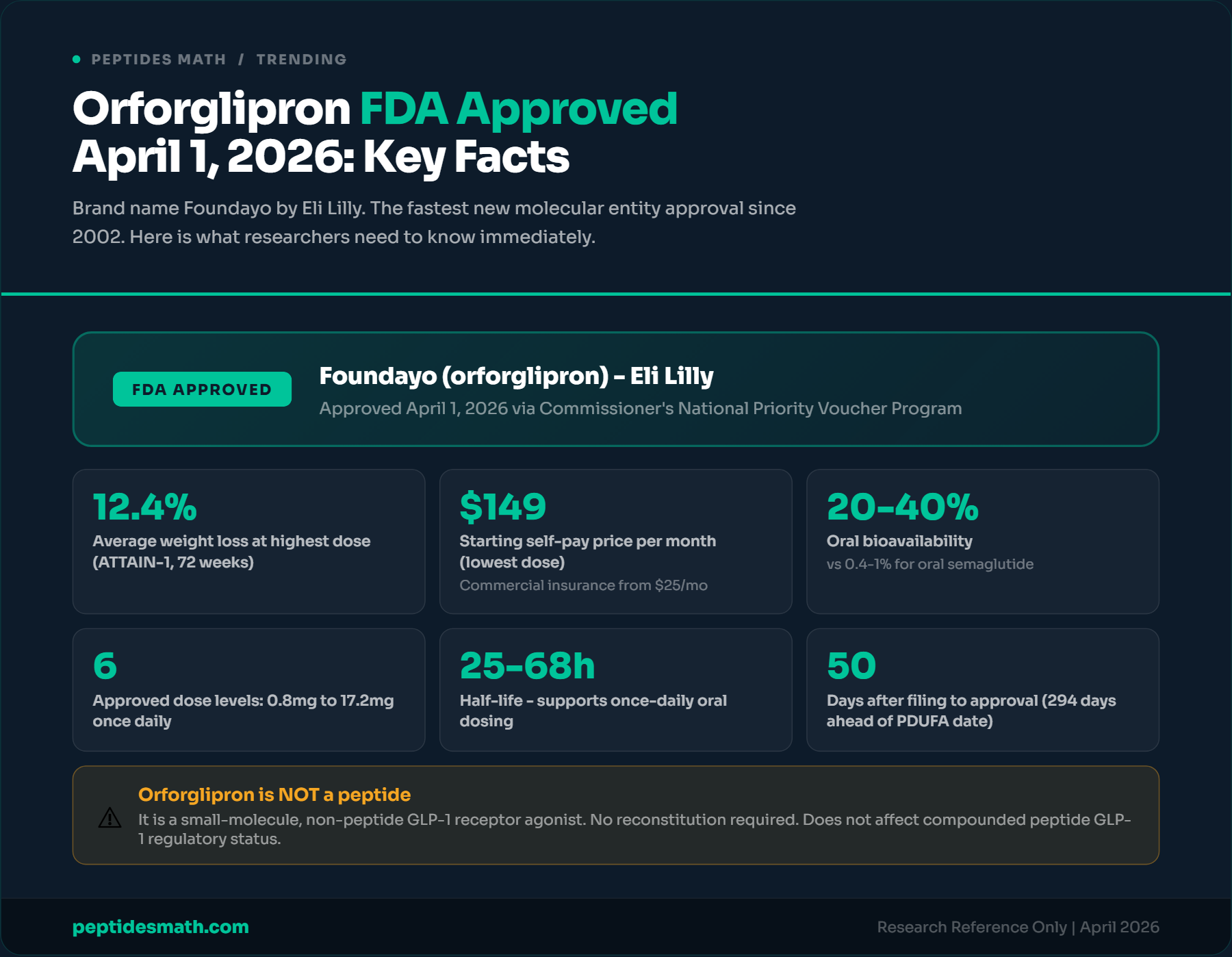
- Orforglipron (Foundayo) received FDA approval on April 1, 2026, for adults with obesity or overweight with weight-related comorbidities
- It is a small-molecule, non-peptide GLP-1 receptor agonist. It is NOT a peptide compound and does not require reconstitution
- The brand name is Foundayo, manufactured by Eli Lilly. Discovered by Chugai Pharmaceutical and licensed to Lilly in 2018
- It is taken orally once daily with no food or water restrictions. This is a key advantage over oral semaglutide, which requires fasting
- Bioavailability is approximately 20 to 40%, significantly higher than oral semaglutide, which achieves only 0.4 to 1%
- ATTAIN-1 Phase 3 trial showed 12.4% average weight loss at the highest dose over 72 weeks
- Approved doses: 0.8mg, 2.5mg, 5.5mg, 9mg, 14.5mg, and 17.2mg with monthly escalation
- Self-pay pricing starts at $149 per month. Commercial insurance copay as low as $25 per month
- This approval does NOT affect the status of compounded GLP-1 peptides like semaglutide and tirzepatide
- Half-life of 25 to 68 hours supports once-daily oral dosing
What is Orforglipron?
Orforglipron (brand name Foundayo) is a once-daily oral GLP-1 receptor agonist developed by Eli Lilly. Unlike other approved GLP-1 receptor agonists on the market, it is not a peptide. It is a small molecule synthesized through chemical processes rather than derived from peptide chains.
This distinction is more significant than it sounds. All previous GLP-1 receptor agonists, including semaglutide, tirzepatide, liraglutide, and the research compounds studied in the compounding pharmacy space, are peptide-based. Their molecular structures are amino acid chains that mimic the naturally occurring GLP-1 hormone. Orforglipron activates the same GLP-1 receptor but does so through allosteric modulation of the transmembrane domain rather than the extracellular binding approach used by peptide agonists.
Why Small Molecule Design Matters
Peptide-based GLP-1 compounds cannot be absorbed effectively when taken by mouth because digestive enzymes break down amino acid chains before they can reach the bloodstream. This is why injectable GLP-1 compounds dominate the market, and why oral semaglutide requires an absorption-enhancing agent called SNAC and strict fasting conditions to achieve even 0.4-1% bioavailability.
Orforglipron’s small-molecule structure is not affected by digestive enzyme hydrolysis. It achieves oral bioavailability of approximately 20-40% without an absorption enhancer, food, or timing restrictions. This is a fundamental pharmacokinetic advantage over every peptide-based oral GLP-1 option.
Discovery and Development
Orforglipron was originally discovered by Chugai Pharmaceutical Co., Ltd. in Japan. Eli Lilly licensed worldwide development and commercialization rights in 2018. It entered clinical development under the compound identifier LY3502970 and received FDA Priority Review under the Commissioner’s National Priority Voucher program, which was established to accelerate approvals addressing critical public health priorities.
The FDA issued its approval decision 50 days after filing, 294 days ahead of the scheduled PDUFA date of January 20, 2027. This made it the fastest approval of a new molecular entity since 2002.
Calculator Link: Orforglipron Dosage Calculator
Calculator Link: Retatrutide Dosage Calculator
Orforglipron vs Peptide GLP-1 Compounds: Key Differences for Researchers
The most important thing for peptide researchers to understand about orforglipron is how it compares to peptide-based GLP-1 compounds, which are central to the research space.

Molecular Structure
Semaglutide, tirzepatide, liraglutide, and other compounded GLP-1 peptides are amino acid chains with molecular weights typically above 3,000 Daltons. They require injectable or highly formulated oral delivery because their peptide bonds are vulnerable to gastrointestinal enzyme degradation.
Orforglipron has a molecular weight of approximately 357 Daltons. It is a synthetic small molecule with no amino acid chain. It cannot be reconstituted like a lyophilized peptide because it does not come as a powder requiring reconstitution. It is formulated as a tablet and taken orally.
Administration
Peptide GLP-1 compounds used in research require subcutaneous injection after reconstitution with bacteriostatic water. Oral semaglutide (Rybelsus) exists but requires 30 minutes of fasting before a small amount of plain water, making it impractical for many patients.
Orforglipron is a once-daily tablet that can be taken at any time of day with or without food. No reconstitution. No injection. No fasting window. This is a fundamentally different user experience.
Receptor Binding Mechanism
Peptide GLP-1 agonists bind to the extracellular domain of the GLP-1 receptor, closely mimicking the natural GLP-1 hormone. Orforglipron acts as a partial agonist and binds allosterically to the transmembrane domain of the same receptor. This different binding mechanism results in stronger cyclic AMP signaling than beta-arrestin recruitment, potentially reducing receptor desensitization compared to full peptide agonists.
Storage
Peptide GLP-1 research compounds require refrigeration at 2 to 8 degrees Celsius after reconstitution and have a limited shelf life of 28 to 30 days. Orforglipron tablets can be stored at room temperature in their original container, protected from moisture. This is significantly simpler than peptide compound storage requirements.
What This Does NOT Mean for Compounded Peptide Research
The approval of orforglipron has no direct impact on the regulatory status of compounded semaglutide, tirzepatide, or other GLP-1 peptides. These are separate compounds in a separate regulatory framework. The FDA Category 2 reclassification process discussed in relation to RFK Jr’s February 2026 announcement applies to peptide compounds and is entirely independent of the orforglipron approval pathway.
Clinical Trial Data: The ATTAIN Program
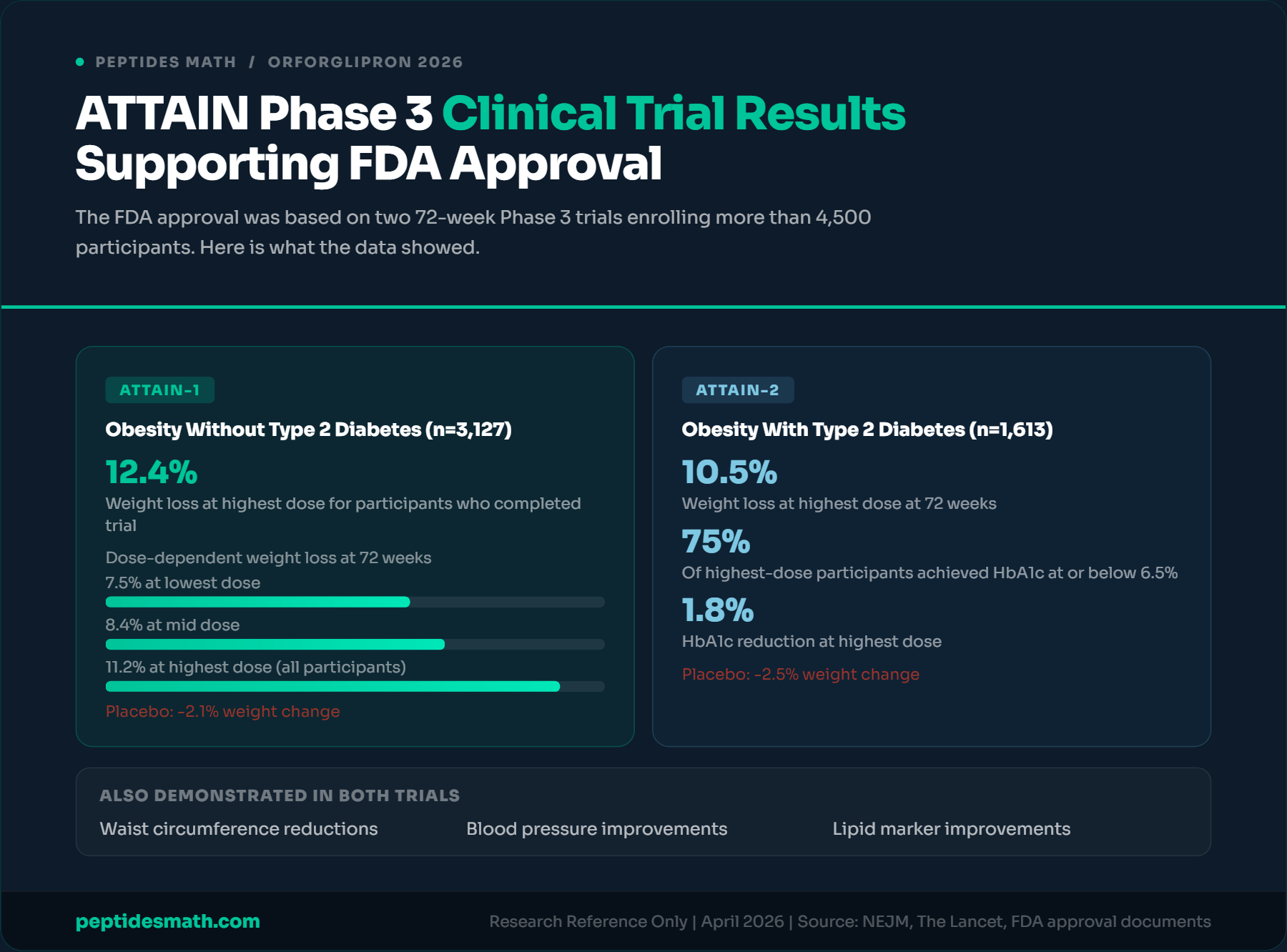
The FDA approval was based on data from the ATTAIN Phase 3 global clinical development program, which enrolled more than 4,500 participants across two registration trials: ATTAIN-1 and ATTAIN-2.
ATTAIN-1: Obesity Without Diabetes
ATTAIN-1 enrolled 3,127 participants with obesity or overweight plus at least one weight-related comorbidity, including hypertension, dyslipidemia, obstructive sleep apnea, or cardiovascular disease, without type 2 diabetes. The trial ran for 72 weeks.
Results at 72 weeks showed dose-dependent weight loss, ranging from 7.5% at the lowest dose to 11.2% at the highest, compared with 2.1% with placebo. Participants who completed the trial and remained on the highest dose lost an average of 12.4% of body weight, equivalent to approximately 27.3 pounds.
The trial also showed improvements in waist circumference, blood pressure, and lipid markers across all orforglipron doses.
ATTAIN-2: Obesity With Type 2 Diabetes
ATTAIN-2 enrolled 1,613 participants with obesity or overweight and type 2 diabetes. Weight reductions ranged from 5.1% to 9.6% across doses compared to 2.5% with placebo over 72 weeks. The trial also demonstrated significant improvements across cardiometabolic endpoints, including reductions in HbA1c.
At the highest dose, 75% of participants achieved an HbA1c of 6.5% or lower, which meets the American Diabetes Association’s definition of diabetes remission.
ACHIEVE Trials: Diabetes Comparison
The ACHIEVE trial series compared orforglipron directly against other diabetes treatments. ACHIEVE-3, published in The Lancet in February 2026, showed orforglipron was non-inferior to oral semaglutide in glycaemic control. ACHIEVE-1 showed superior HbA1c reduction compared to placebo, with 65% of participants on the highest dose achieving HbA1c at or below 6.5% at 40 weeks.
Safety Profile
The most common adverse reactions reported in 5% or more of participants included nausea, constipation, diarrhea, vomiting, dyspepsia, abdominal pain, headache, abdominal distension, fatigue, and gastroesophageal reflux disease. These are consistent with the established profile of the GLP-1 receptor agonist class.
The orforglipron label carries a boxed warning for thyroid C-cell tumours including medullary thyroid carcinoma, consistent with the class warning shared by all GLP-1 receptor agonists. Orforglipron should not be used in patients with a personal or family history of medullary thyroid cancer or Multiple Endocrine Neoplasia syndrome type 2.
Orforglipron Approved Dosing Schedule
Orforglipron is available in six oral tablet doses with a monthly escalation schedule. All doses are taken once daily with or without food at any time of day.
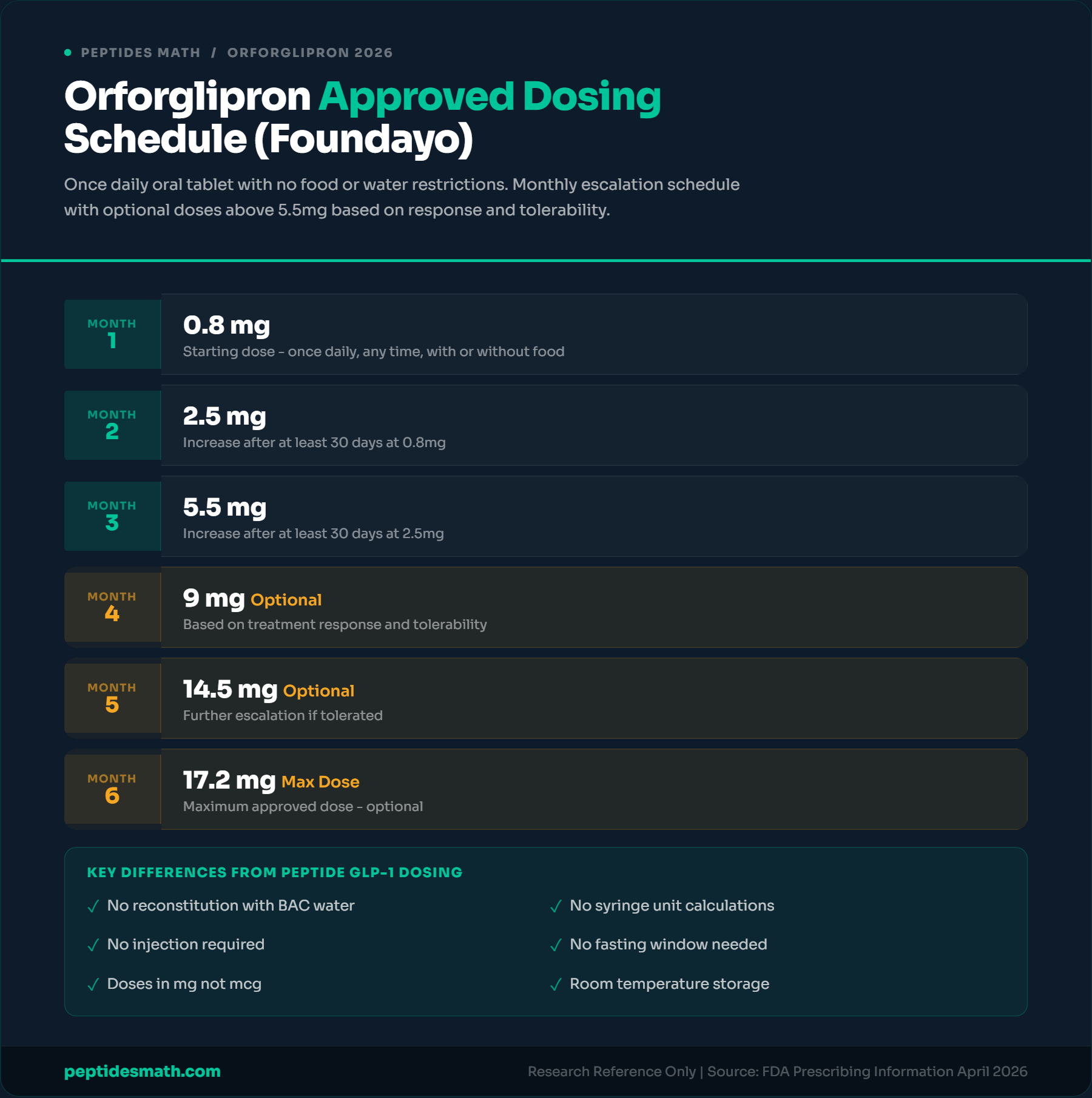
FDA-approved starting dose: 0.8mg once daily. Escalate to 2.5mg after at least 30 days.
Key Differences from Peptide GLP-1 Dosing
Researchers familiar with compounded semaglutide or tirzepatide protocols will notice several important differences with orforglipron dosing. There is no reconstitution step, no calculation of bacteriostatic water, and no measurement of the syringe unit. The dose is a pre-formulated oral tablet.
Compounded semaglutide research doses are typically expressed in micrograms (250 mcg to 2,000 mcg per week). Orforglipron doses are expressed in milligrams (0.8mg to 17.2mg per day). The units reflect the different molecular scale of a small molecule versus a peptide.
Orforglipron Pricing and Access
Lilly announced pricing at approval. Foundayo is available through LillyDirect with prescriptions accepted immediately and shipping beginning April 6, 2026, followed by availability through US retail pharmacies and telehealth providers shortly after.
Pricing Structure
- Self-pay lowest dose: $149 per month
- Self-pay higher doses: up to $399 per month
- Commercial insurance with Foundayo savings card: as low as $25 per month
- Medicare Part D: $50 per month beginning July 1, 2026
These prices position orforglipron significantly below the list prices of injectable GLP-1 medications, including Wegovy and Zepbound, which have list prices above $1,000 per month before insurance. The pricing reflects Lilly’s stated commitment to accessibility.
Comparison to Compounded GLP-1 Costs
Compounded semaglutide and tirzepatide, when available through licensed 503A pharmacies, have typically been priced significantly below branded injectable options. Orforglipron’s self-pay pricing at $149 per month brings an FDA-approved oral option into a more competitive price range.
However, it is important to note that orforglipron is a different compound from compounded GLP-1 peptides. They are not interchangeable. They differ in molecular structure, binding mechanism, bioavailability, and dosing requirements.
What the Orforglipron Approval Means for GLP-1 Researchers
The approval of orforglipron marks a meaningful shift in the GLP-1 receptor agonist landscape. Understanding its implications requires distinguishing between the clinical, commercial, and research dimensions.
A New Mechanistic Direction
Orforglipron is the first approved GLP-1 receptor agonist that achieves its effects through small-molecule allosteric modulation rather than peptide mimicry. This opens a new direction in GLP-1 receptor research that does not rely on amino acid chain structures. Researchers studying GLP-1 receptor pharmacology now have an approved compound demonstrating this mechanism at scale.
No Impact on Compounded Peptide Research
The orforglipron approval is entirely separate from the ongoing regulatory discussion around compounded GLP-1 peptides. The FDA Category 2 reclassification process, the compounding pharmacy framework under Section 503A, and the research-only vendor market for peptide compounds are all unaffected by this approval.
Researchers who work with compounded semaglutide, tirzepatide, or retatrutide in research settings should not interpret the orforglipron approval as having any regulatory implications for those compounds.
Expanding Research into Oral Non-Peptide GLP-1 Agonists
Orforglipron is one of several small-molecule GLP-1 agonists currently in clinical development. Structure Therapeutics reported positive Phase 2 data for its oral small-molecule GLP-1 agonist, aleniglipron, in 2026. The success of orforglipron’s approval pathway may accelerate development timelines for other non-peptide GLP-1 candidates.
For researchers following the GLP-1 compound class, this approval marks the start of a parallel track in which small-molecule GLP-1 agonists develop alongside established peptide GLP-1 compounds, offering distinct pharmacokinetic profiles and delivery options.
Future Research Applications
Beyond obesity, orforglipron is under active investigation for type 2 diabetes, obstructive sleep apnea, osteoarthritis knee pain, hypertension, peripheral artery disease, and stress urinary incontinence. These additional indications are being studied in ongoing clinical trials that will provide further data on the compound’s efficacy across metabolic and cardiometabolic conditions.
Read More: FDA Peptide Reclassification 2026 Guide
Read More: RFK Jr Peptide Announcement 2026
FAQ: Orforglipron FDA Approval 2026
When was orforglipron FDA approved?
Orforglipron was FDA approved on April 1, 2026. It was approved under the brand name Foundayo by Eli Lilly. The approval came through the Commissioner’s National Priority Voucher program, making it the fastest new molecular entity approval since 2002, issued 50 days after filing.
Is orforglipron a peptide?
No. Orforglipron is a small-molecule, non-peptide GLP-1 receptor agonist. It activates the GLP-1 receptor via a different binding mechanism than peptide-based GLP-1 compounds such as semaglutide, tirzepatide, and liraglutide. It does not require reconstitution and is formulated as an oral tablet.
What is the brand name for orforglipron?
The brand name for orforglipron is Foundayo, manufactured by Eli Lilly and Company. It is available through LillyDirect, US retail pharmacies, and telehealth providers.
What is orforglipron used for?
Orforglipron (Foundayo) is FDA approved for adults with obesity, or overweight adults with at least one weight-related comorbidity, used alongside a reduced-calorie diet and increased physical activity to reduce and maintain weight loss. It is also under investigation for type 2 diabetes, obstructive sleep apnea, hypertension, and other cardiometabolic conditions.
How does orforglipron differ from semaglutide?
Semaglutide is a peptide-based GLP-1 receptor agonist available as a weekly injection or a daily oral tablet requiring strict fasting conditions. Orforglipron is a small-molecule, non-peptide GLP-1 receptor agonist taken as a once-daily oral tablet with no food or water restrictions. It achieves 20-40% oral bioavailability, compared with 0.4-1% for oral semaglutide. They activate the same receptor through different binding mechanisms.
What is the starting dose for orforglipron?
The FDA-approved starting dose is 0.8mg once daily taken orally with or without food. After at least 30 days at 0.8mg, the dose is increased to 2.5mg. Further escalations to 5.5mg, 9mg, 14.5mg, and 17.2mg are available at monthly intervals based on response and tolerability.
Does the approval of orforglipron affect compounded GLP-1 peptides?
No. The orforglipron approval is entirely separate from the regulatory framework governing compounded GLP-1 peptides, including semaglutide and tirzepatide. Compounded peptides operate under Section 503A of the Federal Food, Drug, and Cosmetic Act. The orforglipron approval pathway is independent of that framework.
What does ATTAIN stand for?
ATTAIN is the Phase 3 clinical development program for orforglipron in obesity. ATTAIN-1 studied participants with obesity or overweight without type 2 diabetes (3,127 participants), and ATTAIN-2 studied participants with obesity or overweight and type 2 diabetes (1,613 participants). Both trials ran for 72 weeks.
Related Research Tools on Peptides Math
- Orforglipron Dosage Calculator
- Semaglutide Dosage Calculator
- Tirzepatide Dosage Calculator
- Retatrutide Dosage Calculator
- MCG to MG Conversion Guide
- Free Peptide Dosage Calculator